
Evergreen
In wild wind, you don't fight you bend

Evergreen

I see you Evergreen
How you sway and lean
You show me how to forgive and mend
In wild wind, you don’t fight you bend

Needles paint the sky
With tender strokes so fine
I feel my body moving in time
With you dear Evergreen

La da da dee, oh ever, evergreen
La da da dee, oh evergreen, green
La da da dee, oh ever, ever, ever green
Green, green, green, evergreen

I hear you Evergreen
Your songs and poetry
Can you hear me singing along
You’ve always let me know I belong

Limbs that I once climbed
No fear, so young, so spry
You gave me courage and such delight
Thank you Evergreen

La da da dee, oh ever, evergreen
La da da dee, oh evergreen, green
La da da dee, oh ever, ever, ever green
Green, green, green, evergreen

Limbs that I once climbed
No fear, so young, so spry
You gave me courage and such delight
Thank you ever
Thank you forever
Thank you Evergreen
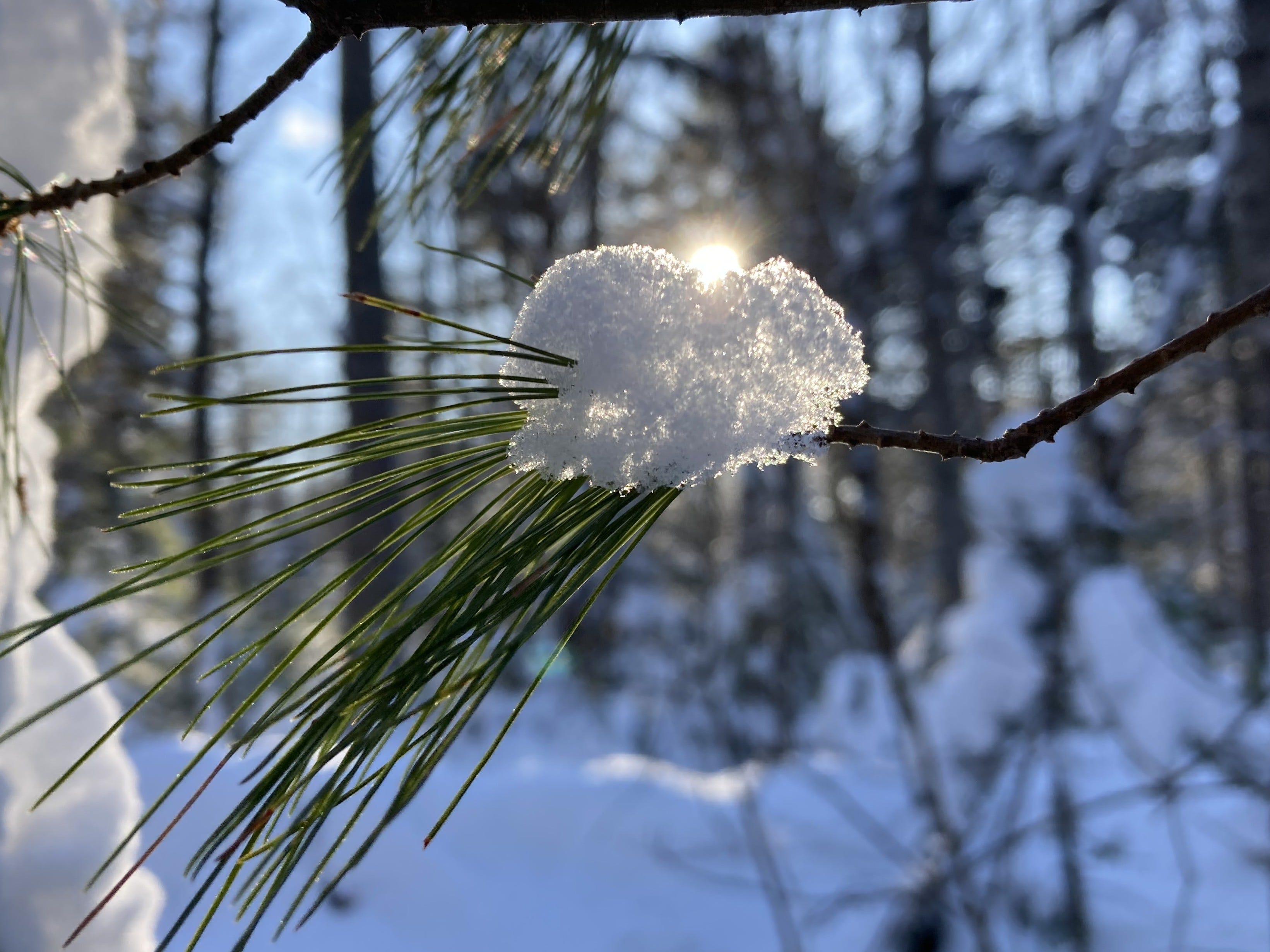
So how do these emerald towers stay green through winter? The short answer is that the needles have a waxy coating (cuticle) that helps to keep the needles protected from freezing temperatures. The needles have a natural antifreeze (proteins and sugars) which lowers the freezing point of water and keeps the cells from crystalizing and rupturing.
And why do evergreens expend energy to go through this process? The very short answer is that they can still benefit from photosynthesizing when temps are above freezing and the sun is shining.
This site has some helpful info which is simply explained and to the point. Here is an example:
The small, narrow shape of evergreen needles minimizes the surface area exposed to the elements. This reduces the amount of water lost through transpiration and prevents snow and ice from weighing down branches.
Their unique ability to retain needles, conserve moisture, and protect against freezing temperatures allows them to stay green and vibrant while other trees lie dormant. Their resilience makes them a vital part of cold-weather ecosystems and a symbol of endurance and life during the winter months.
Evergreens are an oasis for a variety of animals. They provide shelter from predators and harsh weather conditions. Many birds and mammals benefit from different forms of food offered by evergreens. I have seen many pine cone and spruce cone scale middens made by red squirrels. They peel off the scales of the cones to get to the seeds deep inside. Golden-crowned Kinglets flit from tree to tree finding overwintering caterpillars to dine on. These are just a few examples of how evergreens give to the forest.
Limbs that I once climbed. When I was a child, I was crazy about climbing trees. I had a favorite White Pine that I loved to climb at sunset. I would sit on a certain branch facing the west and glow with Pine in that golden warmth. Now when I look up at the pines at sunset, I can still remember that feeling and long to be up there.
To my mother’s dismay, I always had sap on my hands, clothing, and sometimes my hair, which she would have to cut out. To not have sticky hands for the rest of the day, I would simply rub them in dirt; again, my mother wasn’t impressed. But what I have learned in recent years is that that sticky stuff wasn’t sap; that’s just what everyone called it and most people still do.
Sap - The general term for the fluid inside a tree, including both xylem and phloem. It’s watery or sticky and can flow easily.
Resin - A thick, sticky substance produced by coniferous trees (like pines) to seal wounds and defend against insects and pathogens. It’s not involved in nutrient transport.
Pitch - Essentially hardened or thickened resin. It often forms on the outside of tree bark where resin has dried.
* I have read that sometimes resin and pitch are used interchangeably.
I have also recently learned that conifers (evergreens) have antiseptic properties and other beneficial medicinal qualities. And I have some proof. One day I was walking in the woods and ended up getting two scratches on my arm. So I went to a Balsam Fir and punctured one of the resin blisters. I applied the resin to one of the scratches and that scratch healed faster than the other. It can also be used for minor burns and many other health issues.
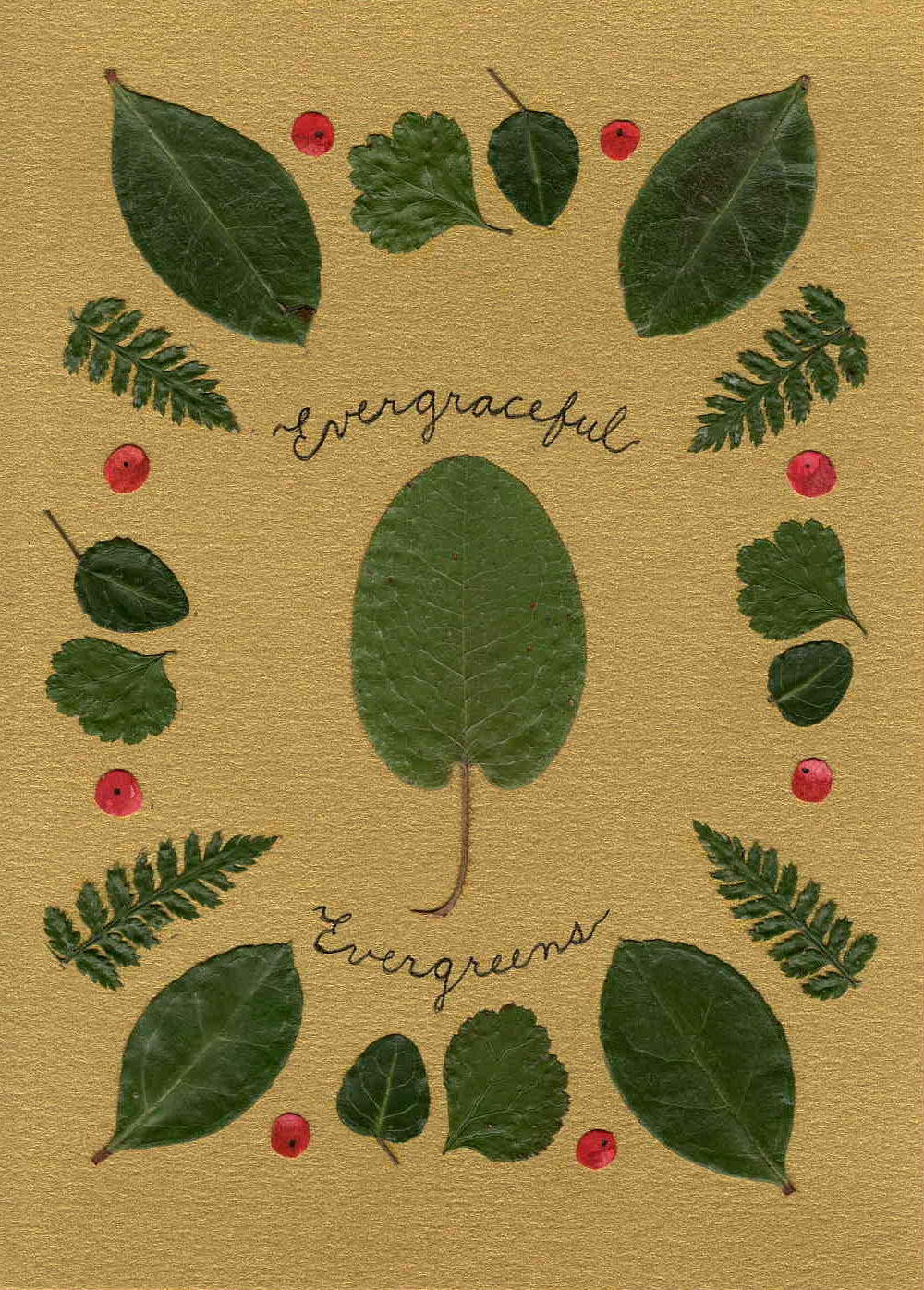
These are the actual leaves of Wintergreen, Partridge Berry, Goldthread, Trailing Arbutus, and a type of wood fern (I think). These plants use similar techniques as the evergreen trees to keep their color and survive winter.
The melody of “Evergreen” is borrowed from “I’ll See You in my Dreams”, written by Isham Jones and Gus Kahn in 1924. I added the La, da, da, dee parts.
Thank you for taking the time to listen and read. If you would like to give the gift of song and nature to a friend or relative, you can give A Nest of Songs by clicking the button below. Happy Solstice, Holidays, and enjoy the dusting of snow on evergreens.
Thank you Matt, I appreciate how much time you took to notice the details. So glad it worked for you; I wasn't sure.....I never am. :)
I love this post! I really like how you included song, interesting info about trees, artwork, and nuggets of personal memories related to trees and wove it all together. Your reinterpreted version of that song is wonderful. Thank you for sharing this 💚