
Cozy Cave
The Funky and Fabulous Art of the Skunk Cabbage

Cozy Cave

Come on in to my cozy cave
Stay for an hour or stay for the day
Oh come on in to my cozy cave

I got spathe and I got space
I got a warm homey place
For you and you to sit
Around the flowers on my spadix

Oh, I hope, hope, ho, oh, oh, hope
You’ll bring your saddlebags of gold dust
But if you don’t, don’t, do, oh, oh, don’t
I hope you say, I hope you say hello, I hope you say hello

Come on in to my cozy cave
Stay for an hour or stay for the day
Oh come on in to my cozy cave

Mouth Trumpet

Oh, I hope, hope, ho, oh, oh, hope
You’ll bring your saddlebags of gold dust
But if you don’t, don’t, do, oh, oh, don’t
I hope you say, I hope you say hello, I hope you say hello

Come on in to my cozy cave
Stay for an hour or stay for the day
Oh come on in to my cozy cave
Come on in to my cozy cave
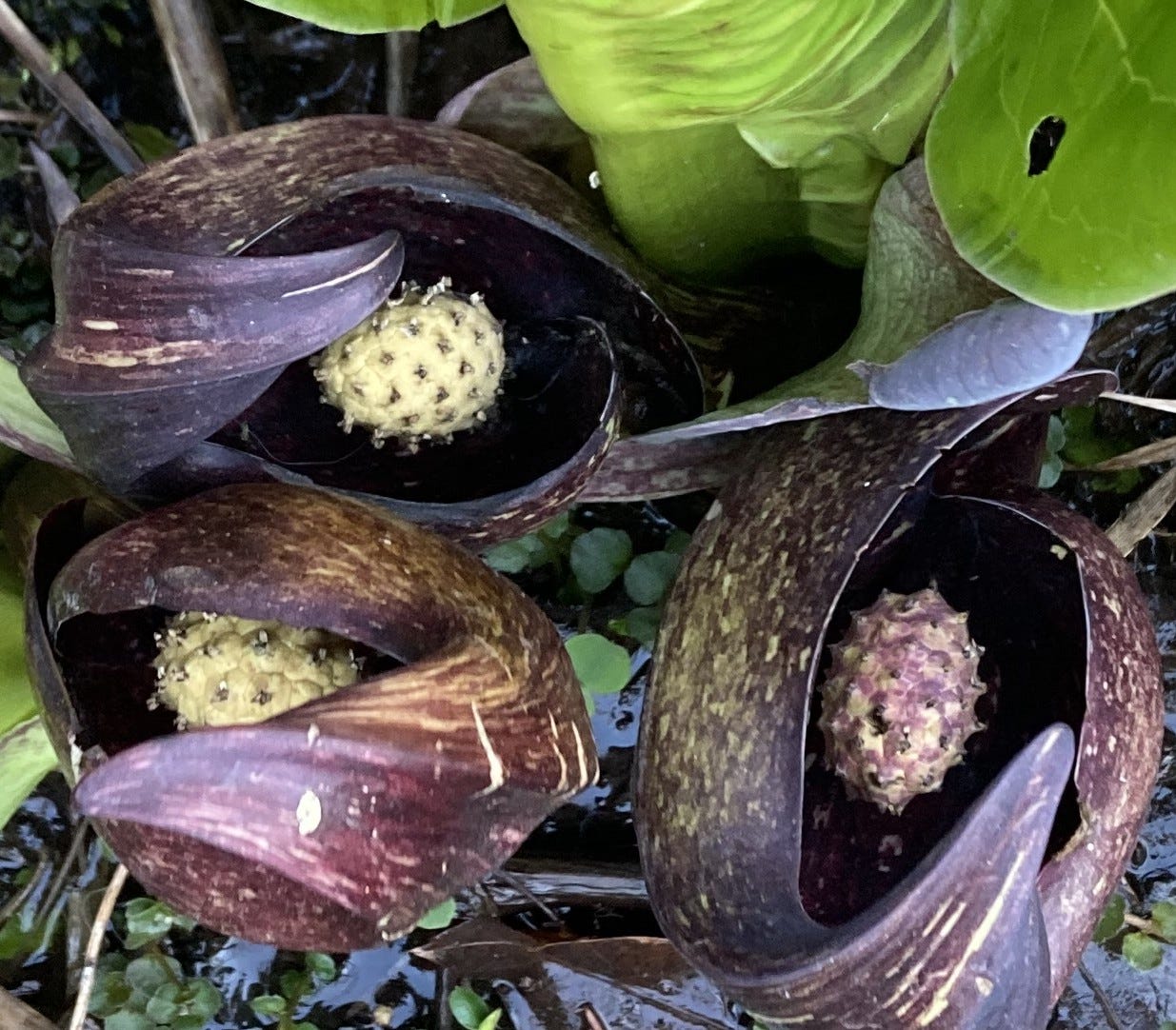
Eastern Skunk Cabbage. Gorgeous. Unique. Strong. Sensual. If Georgia O’Keefe had lived in the eastern half of the U.S., you can bet she would’ve painted Skunk Cabbage. The lines, the satiny texture, the leathery hooded dark maroon cloak embracing the oval world of the wee flowers within.
Where did this glorious beast come from? Underground? The soil and moist beings sculpting the warm, smooth, cave-like creature? Or from outer space? Spread here by alien seeds with the power to melt snow by producing heat with thermogenesis? Or from a science project? A mutation of a 7th grader’s dream to create animals from plants?
Hmmm……there is some truth to all of the above……
Symplocarpus foetidus, Skunk Cabbage (SC) is a plant who acts like an animal by generating its own heat by a process called thermogenesis. But why would a plant evolve to have this capability? These curvy, sexy, creatures (yes, I do think their shapes are kind of sexy) need to get a jump on the more traditional flowers with colorful petals. SC can break through the cold earth, through snow and ice in early March to be the first flowers to get the attention of the pollinators.
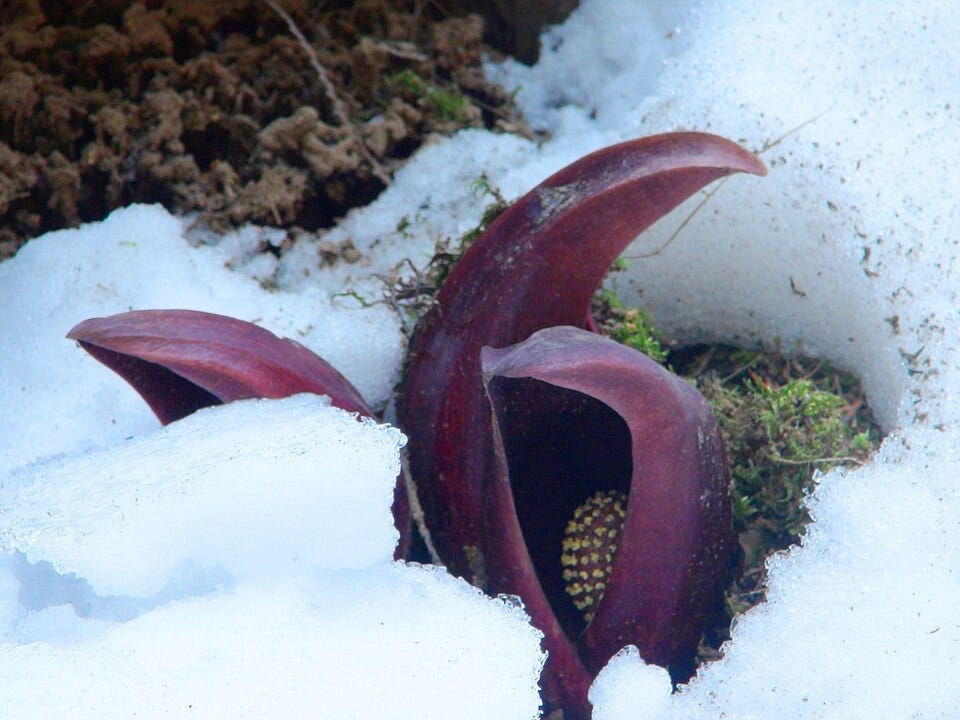

Being the first is just one strategy. Sometimes being smelly is a benefit (unless you are a 7th grader). Some insects are attracted to decaying meat for various reasons and SC has evolved to emit that odor to attract these insects. Maybe these insects enter the cave and find that they have been tricked and start swearing, insect expletives echoing off the cave walls…..but then their curses turn into ahhhhs in celebration of the warmth surrounding their little bodies.
The hood/shroud/cave is called the spathe, which surrounds the fleshy globe of petal-less flowers called the spadix. Inside the dark cave of the spathe is a warm refuge for many insects. Some go there just to warm up, a free sauna. And many will be carrying pollen from the previous SC they visited.
Even honey bees are drawn into the spathe. The SCs are providing the first pollen in early spring and the bees collect this nutritious golden dust to feed to their new, young brood. And what honey bee could resist a warm safe place on a windy rainy raw spring day?
That raw spring day may be 40°F outside, but inside the cozy cave it can be up to 20°F warmer. A significant difference! Please visit Bryan Pfeiffer to see his fabulous photos and the heat these critters create. He even includes an infrared photo!


The spadix reminds me of a pineapple. However, the tiny flowers do not provide any sweetness, no nectar, just pollen. The flowers consist both female and male parts. The process of fertilization is explained here:
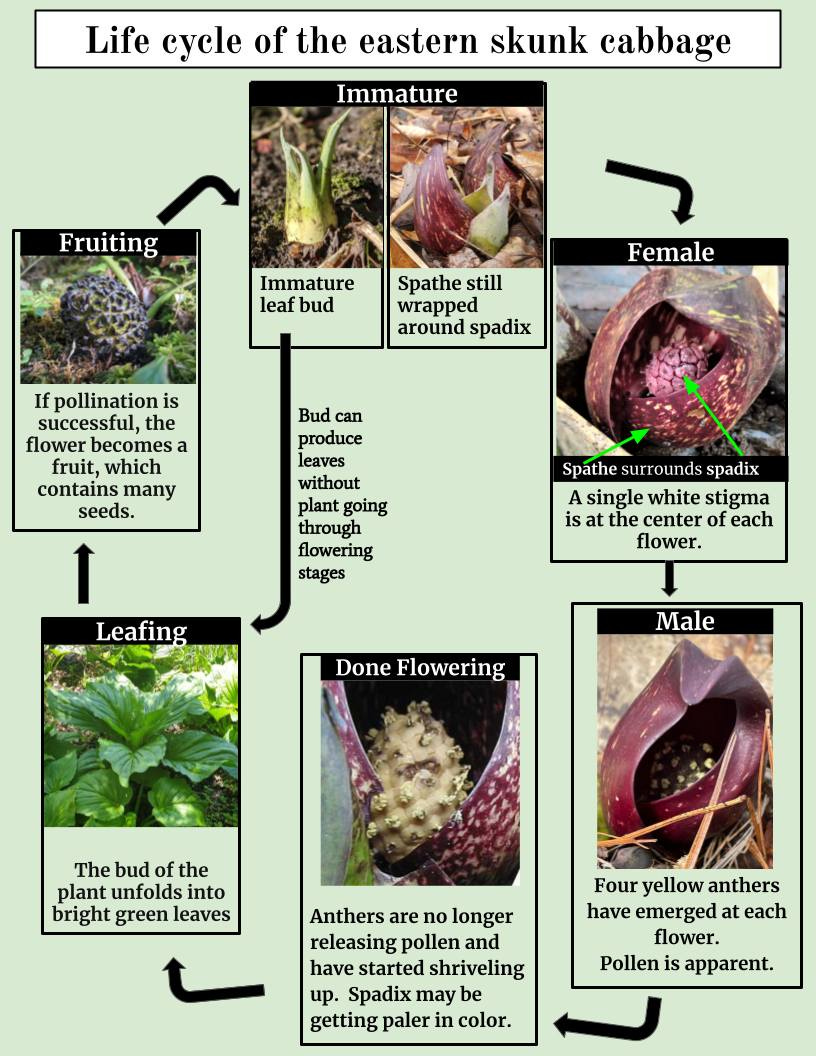
The female flower parts - the pistils - bloom first, followed by the pollen-producing male parts, or stamens. This sequence fulfills two roles. It deters the plant from self-pollinating, and it gives the pistils a chance to receive pollen from earlier-blooming and more vigorous neighbors, thus strengthening the species.
If you are curious about when to find these pieces of sculpted art, March and April is the time to look. Some are losing their luster by mid April, but there are enough out there to still find some beauties along with their veiny bright green leaves. And as for where to look, Sarah Gladu from Coastal Rivers Conservation Trust writes:
These water-loving plants will grow in muddy bogs, swamps, wet woodlands and streambeds. They prefer shade and wet soils, though they cannot tolerate having their roots wet for prolonged periods.
Enjoy your quests to find these sweet little gnomes as you walk along your favorite stream or bog. Peek inside if you can.
P.S. I just came across this explanation with photos of the Skunk Cabbage life cycle. I exclaimed, “Oh!” when I learned about the different colors of the spadix and its flowers.
Thank you for listening and reading. Please feel free to share with others and to share your own Skunk Cabbage observations.
I love this! Who knew a skunk cabbage could be so beautiful.